The basic swap
Good news first. Most slow cooker recipes keep their ingredients, their order, and their seasoning. Nothing about the flavours changes. The cooking just moves under pressure, where hours shrink into minutes.
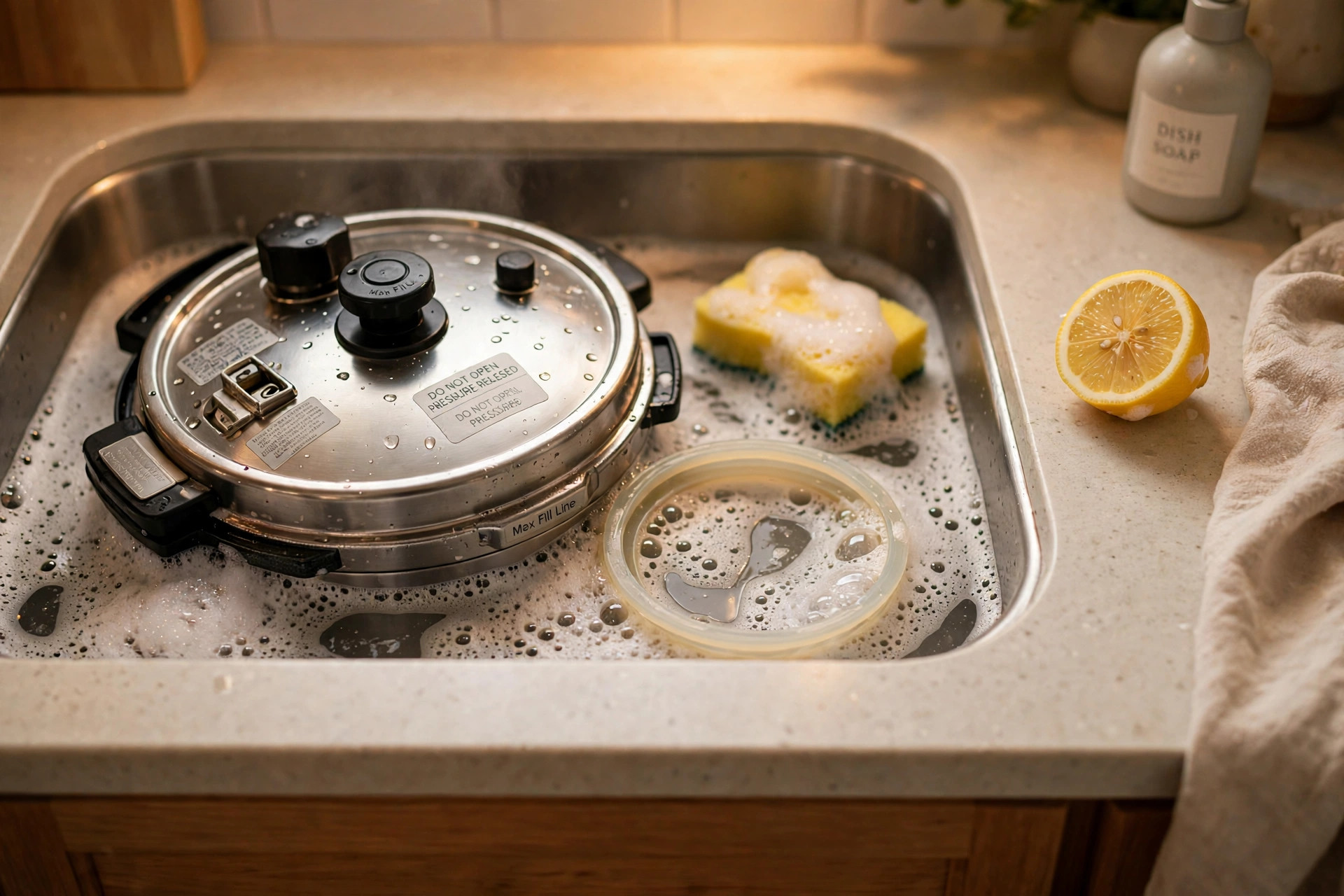
Build the recipe the same way you would in the slow cooker, with three changes: the cooking time, the amount of liquid, and a short list of ingredients that wait until the end. The sections below take those one at a time. One more check before the lid goes on: a recipe that fills a big slow cooker still has to respect the fill line inside the pot. Two thirds full is the working limit, and only halfway for foods that foam, like beans and grains.
Time: the working table
The table below is the starting point most cooks use. Find the slow cooker time in your recipe, then read across to the pressure time.
| Slow cooker | Under pressure |
|---|---|
| 8 hours, low setting | 25 to 30 minutes |
| 6 hours, low setting | 20 minutes |
| 4 hours, high setting | 15 minutes |
| 3 hours, high setting | 10 to 12 minutes |
Treat the table as a guide for stews, soups, and sauces. Big pieces of meat follow the meat, not the table. A whole roast needs the time its thickness calls for, and those times live on the cooking times chart. When a converted dish finishes a little underdone, five more minutes under pressure fixes almost anything. Checking costs you nothing but a little steam.
Liquid: less in, a simmer at the end
A slow cooker recipe was written with enough liquid for a long, gentle cook. Under pressure, almost none of that liquid leaves the pot, because the lid seals tight. So a converted recipe made with the full amount often ends up soupy.
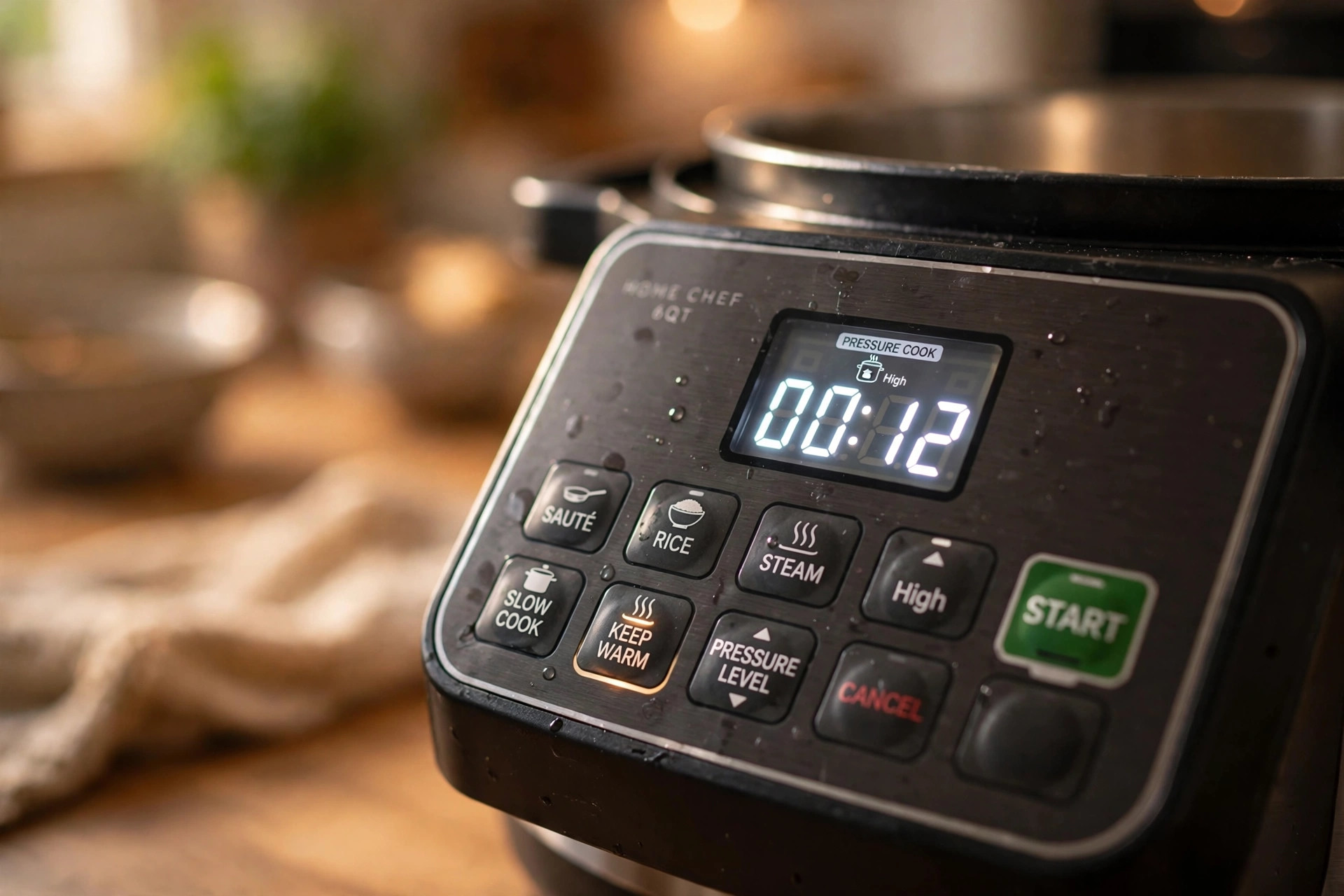
The working rule is to cut the added liquid by about a third. Keep at least one cup of liquid in the pot no matter what, because the cooker needs that much to make steam and come to pressure. Thick sauces and tomato products do not count as liquid on their own. Let them sit on top of the food, with thinner liquid underneath, so the bottom of the pot stays wet and the burn warning stays away.
If the dish still comes out wetter than you want, it is not a failure. Take the lid off, press Sauté, and simmer for a few minutes. The sauce reduces, the flavours concentrate, and dinner is saved. A short simmer at the end is part of the conversion, not a rescue.
What goes in at the end
Some ingredients cannot take pressure. Dairy curdles and can scorch, so cream, milk, sour cream, and grated cheese go in after the lid comes off, while the food is still hot enough to melt them in. Cornstarch slurries only thicken at a simmer, so they go in at the end too, with the pot on Sauté.
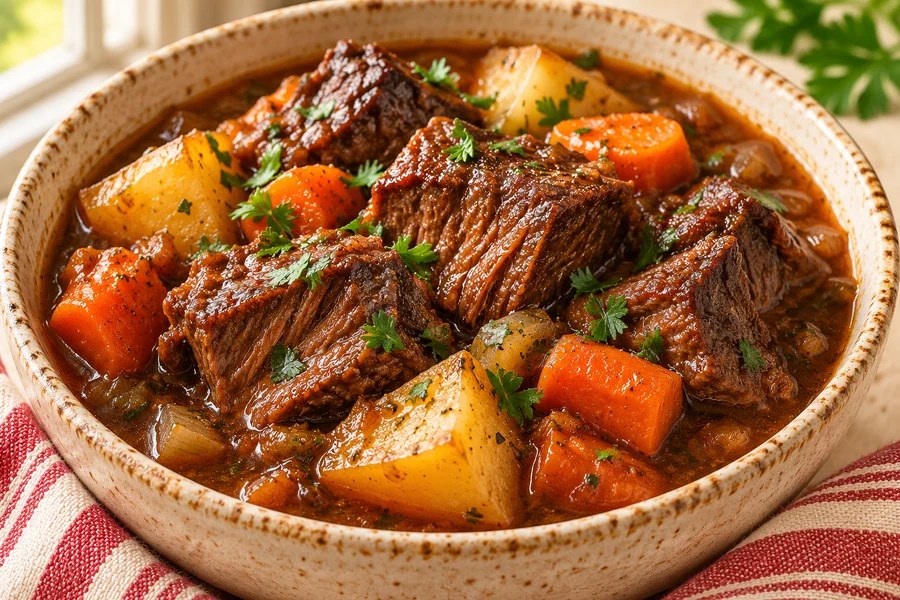
Fresh herbs lose their punch under pressure, so stir them in at the end where they belong. The same goes for vegetables that cook fast. Peas, spinach, zucchini, and sweet peppers turn to mush in minutes under pressure. Cook the stew first, then stir the quick vegetables in and let the heat of the dish finish them. Mush is a texture. It is just not the one you planned.
What does not convert well
A few recipes are better left in the slow cooker. Anything built on a dry crust or crisp skin will come out soft, because steam is the opposite of crisp. Pressure cooking is wet cooking, and no setting changes that.
Delicate fish is another poor fit. It cooks in about the time the pot takes to come to pressure, and the wait under pressure makes it fall apart. And if the slow cooker was really being used as a small oven, for baking or for roasting something dry, keep that recipe where it is. Not every recipe needs converting. Some just need the appliance they were written for.